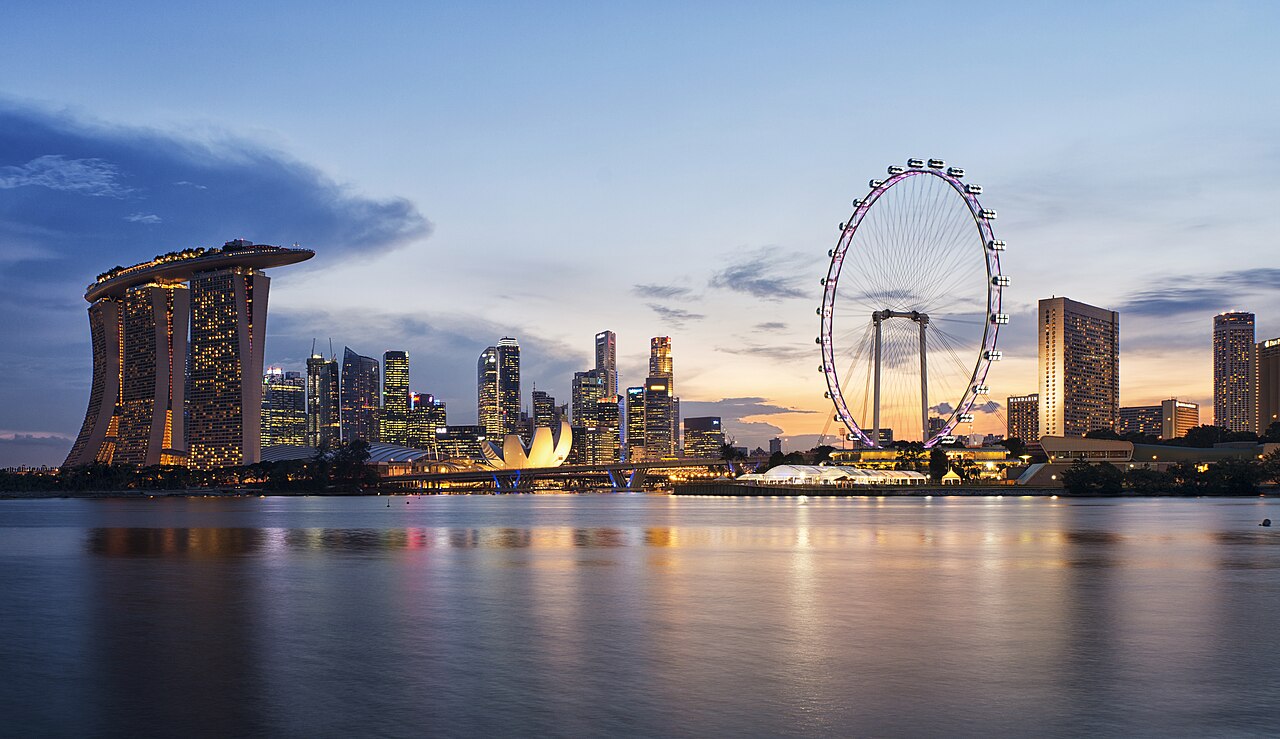
From Trading Post to Global Hub: Singapore's Economic Ascent
In the heart of Southeast Asia lies Singapore, a sovereign island city-state that defies its diminutive size with an economic might that reverberates globally. Its journey from a humble British trading post in the early 19th century to a modern-day financial, manufacturing, and logistics powerhouse is a testament to visionary leadership, strategic planning, and an unwavering commitment to progress. Often dubbed the "Lion City," a name derived from the Sanskrit Simhapura, its very identity hints at strength and ambition, traits that have undeniably shaped its remarkable trajectory. For those intrigued by the fascinating origins of its moniker, exploring The Lion City Legend: Unpacking Singapore's Name and History offers a deeper dive into its historical roots.
This article delves into the pivotal moments and defining characteristics that transformed Singapore into one of the world's wealthiest nations per capita, boasting a nominal GDP per capita of approximately $94,000 in recent estimates. We'll explore the foundational steps, the architects of its prosperity, and the strategic pillars that continue to underpin its resilience and growth.
The Foundations: From Colonial Outpost to Independent Nation
The story of modern Singapore began in 1819 when Sir Stamford Raffles established it as a British trading post. Its strategic location at the southern tip of the Malay Peninsula, nestled between the Straits of Johor and the Singapore Strait, quickly made it a vital entrepôt – a port where goods could be imported, stored, and re-exported without payment of duties. This early role laid the groundwork for its future as a global trade facilitator, fostering an open economy intrinsically linked to international commerce.
However, the path to prosperity was far from smooth. After gaining self-governance in 1959 and a brief, tumultuous merger with Malaysia in 1963, Singapore was thrust into full independence on 9 August 1965. This separation, driven by irreconcilable political and economic differences, left the nascent nation facing formidable challenges: a tiny domestic market, a lack of natural resources, ethnic tensions, and geopolitical instability in a post-colonial world. Many observers were skeptical of its long-term viability. Yet, it was precisely these pressures that forged a collective resolve to not just survive, but to thrive, by strategically leveraging its geography and investing heavily in its human capital.
Architects of Prosperity: Lee Kuan Yew's Transformative Vision
The post-independence era was largely defined by the visionary leadership of founding Prime Minister Lee Kuan Yew, who governed from 1959 to 1990. Under his stewardship, the People's Action Party (PAP), which has maintained dominance through consistent electoral victories, implemented a series of rigorous, pragmatic, and often unconventional policies. These were guided by principles of meritocracy, economic pragmatism, and social discipline – cornerstones that continue to shape Singapore's unique identity.
- Rigorous Anti-Corruption Measures: Lee Kuan Yew's administration took a zero-tolerance stance against corruption, implementing stringent laws and establishing independent bodies to ensure accountability. This dramatically reduced the bureaucratic hurdles and risks often associated with doing business in developing nations, creating a transparent and trustworthy environment that attracted significant foreign investment.
- Investment in Human Capital: Compulsory education policies focused on English as the language of commerce and science, coupled with vocational training, ensured a highly skilled and adaptable workforce. This made Singapore an attractive base for multinational corporations (MNCs) seeking efficient operations and innovative talent.
- Public Housing and Social Stability: Ambitious public housing initiatives provided affordable homes for a vast majority of the population, fostering a sense of ownership and social cohesion. This, alongside comprehensive healthcare and social safety nets, created a stable society crucial for long-term economic planning.
- Market-Oriented Reforms and Global Integration: Despite its socialist roots, Singapore embraced market-oriented policies, actively courting foreign investment, promoting free trade, and developing world-class infrastructure like its port and Changi Airport. This pivot transformed its economy from simple entrepôt trade to a sophisticated manufacturing powerhouse (especially in electronics, chemicals, and precision engineering) and a burgeoning financial services sector.
These decisive actions propelled Singapore into an era of sustained high growth rates and remarkably low unemployment, laying the indestructible foundation for its future economic might.
Singapore Today: A Global Financial Powerhouse and Innovation Hub
Fast forward to today, and Singapore stands as a vibrant testament to its past efforts. It is globally recognized not just as a leading financial hub, but also as a critical logistics center, a manufacturing stronghold, and an increasingly important hub for innovation and technology. Its strategic location continues to serve it well, acting as a key maritime chokepoint and air transit point connecting East and West. This geographical advantage, combined with unparalleled infrastructure investments, ensures its continued relevance in global trade flows.
The economy has diversified beyond its traditional pillars into high-value sectors such as biomedical sciences, advanced engineering, information and communications technology, and sustainable urban solutions. The presence of countless multinational corporations, drawn by its stable political environment, robust legal framework, skilled workforce, and connectivity, further solidifies its position. For businesses considering expansion into Asia, Singapore often serves as the ideal regional headquarters due to its ease of doing business and access to regional markets. Its proactive approach to future-proofing its economy, embracing digitalization, and investing in research and development ensures its continued competitiveness amidst global economic fluctuations.
Governance and Social Fabric: The Bedrock of Success
Underpinning Singapore's economic success is its unique system of governance and social order. As a parliamentary republic, its government, led by an executive prime minister and a unicameral parliament, is characterized by exceptional institutional integrity. With a 2024 Corruption Perceptions Index score of 84 out of 100, Singapore consistently ranks among the least corrupt nations globally, a stark contrast to many regional norms. This high level of governance instills confidence in investors and ensures efficient allocation of public resources.
Crucially, Singapore's commitment to social discipline is manifest in its stringent laws, which enforce order and maintain one of the lowest crime rates globally. While these laws, such as caning for vandalism or capital punishment for drug trafficking, sometimes draw international scrutiny for limiting civil liberties like free speech and assembly, they are widely credited internally with creating a safe, clean, and orderly society. This unique blend of strict laws, low crime, and robust economic growth presents a fascinating case study, explored further in Singapore's Paradox: Strict Laws, Low Crime, and Global Prosperity. The stability and predictability derived from this governance model are invaluable assets, making Singapore an incredibly attractive and secure environment for both its resident population – projected to reach 6.11 million by June 2025 – and the global businesses it hosts.
Practical Insight: The Singapore Model
For developing nations or businesses seeking a blueprint for rapid economic advancement, Singapore offers compelling lessons: strategic pragmatism over ideology, relentless investment in human capital, unwavering commitment to good governance, and a proactive embrace of global economic trends. Its ability to identify niches, cultivate highly skilled talent, and maintain a corruption-free environment has allowed it to punch far above its weight on the global stage.
Conclusion
From a small island trading post to a vibrant, global economic hub, Singapore's journey is a powerful narrative of ambition, adaptation, and disciplined execution. It stands as a beacon of what can be achieved through visionary leadership, sound economic policies, and a resolute commitment to nation-building. As it continues to navigate the complexities of a changing world, investing in innovation, sustainability, and its people, Singapore remains a dynamic and influential player, poised to continue its remarkable ascent as a true marvel of the 21st century global economy.